Begin with what the poem can draw from
Name the banks and shape the words or phrases that belong to them.
A work for generative literature · by Mozare · 2026
TAROKE RIMIXER turns the making of a generative poem into a visible, revisable encounter. The writer brings the material, composes the grammar through which it may change, and shapes the time of its recurrence. A generated line can be tested without losing contact with the construction that produced it.
Name the banks and shape the words or phrases that belong to them.
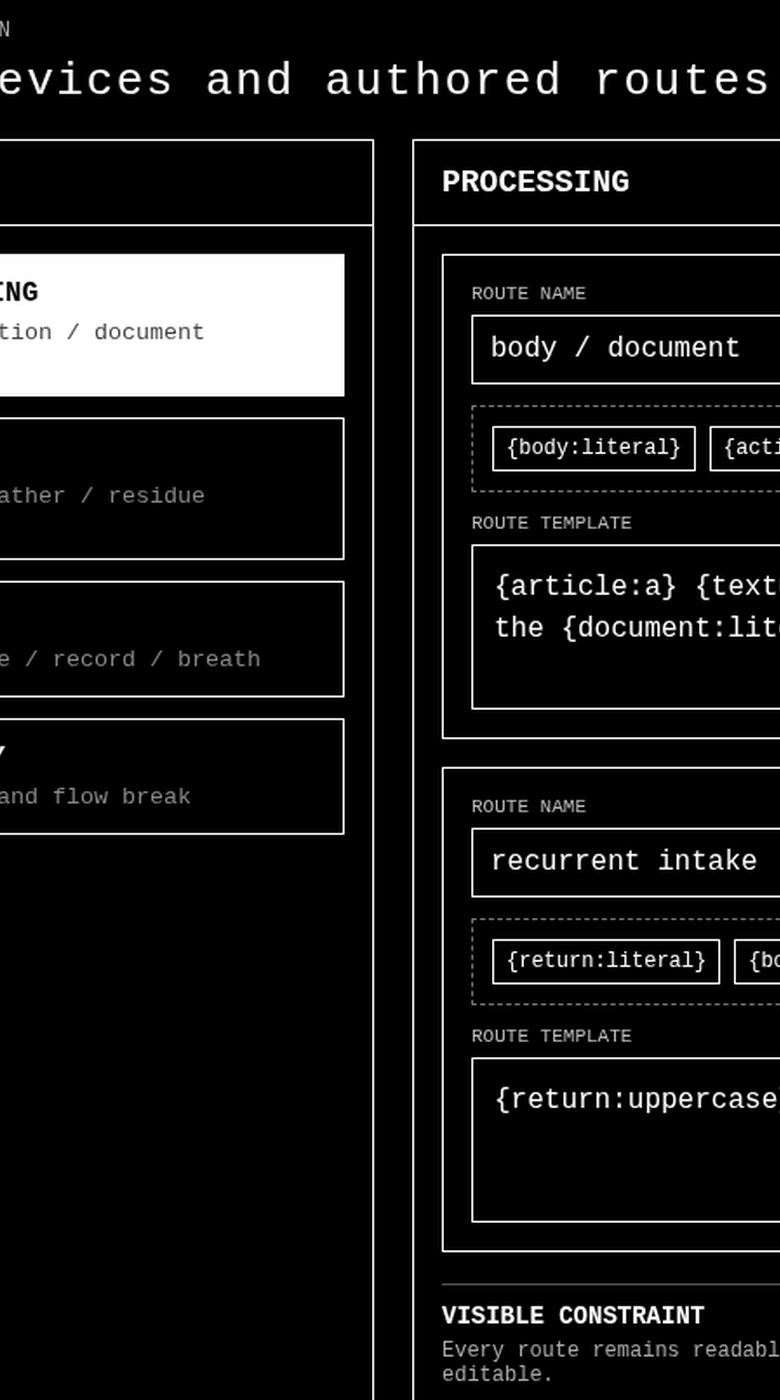
Give the material possible transformations, then write the routes through which a line may be formed.
Arrange stanza, flow, and surface conditions; run the work; revise from the evidence it produces.
The selected views follow a poem from authored material into line-making, then toward runtime and release.
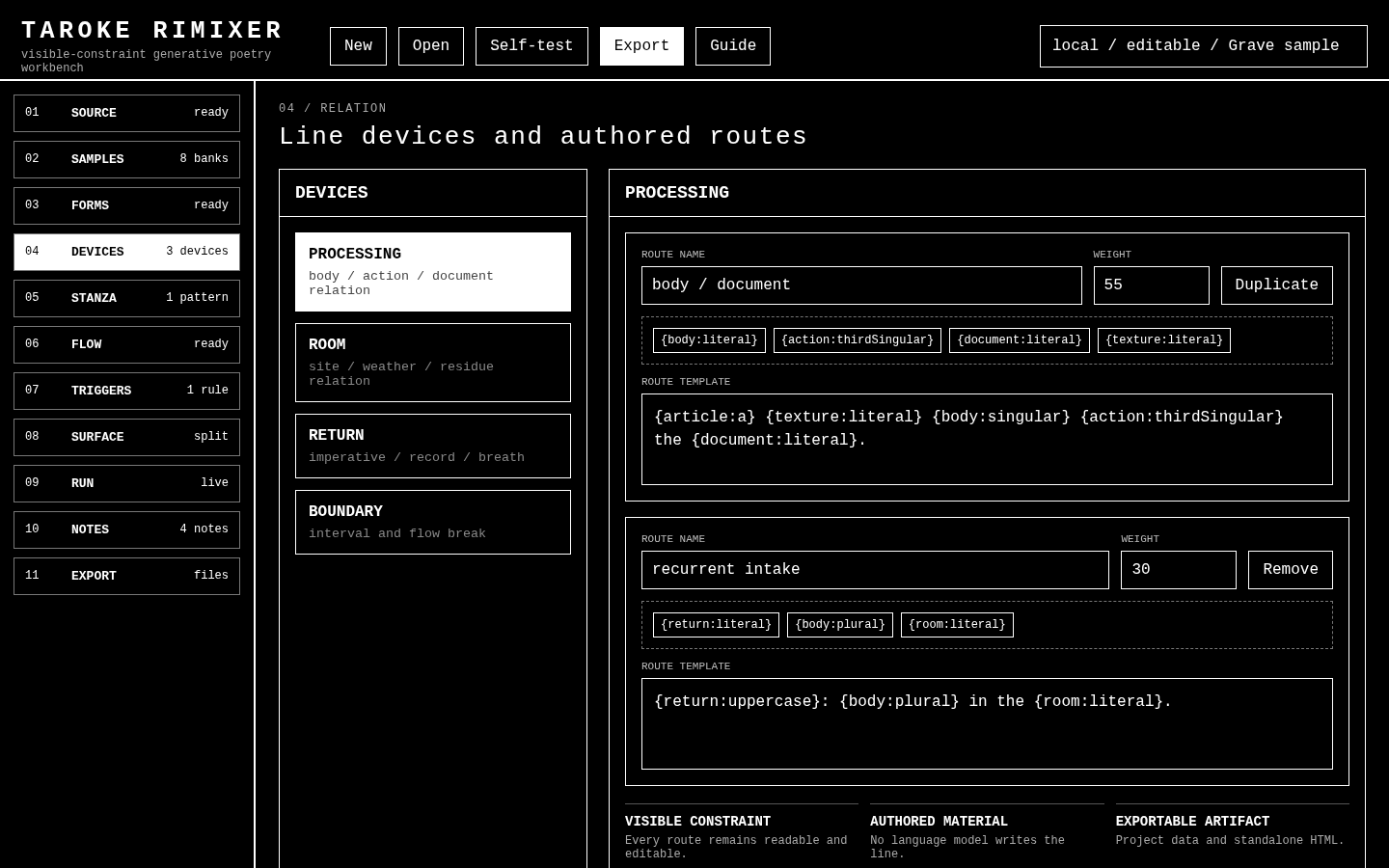
The workbench coordinates its navigation with the current project state. Line devices and editable routes remain visible in the same field.
The phone gives one compositional chamber the full width of the screen while navigation remains reachable below.
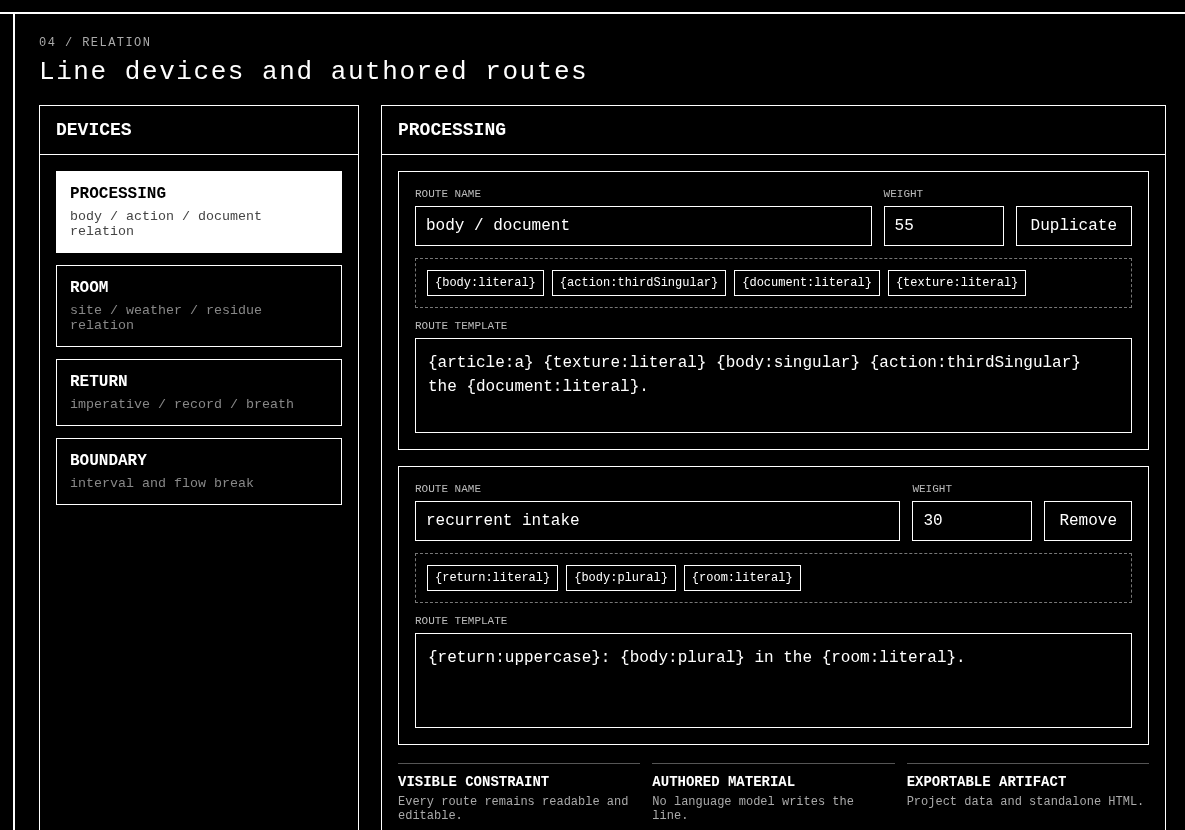
The route remains legible as a sentence-like pattern rather than an opaque block of implementation code.
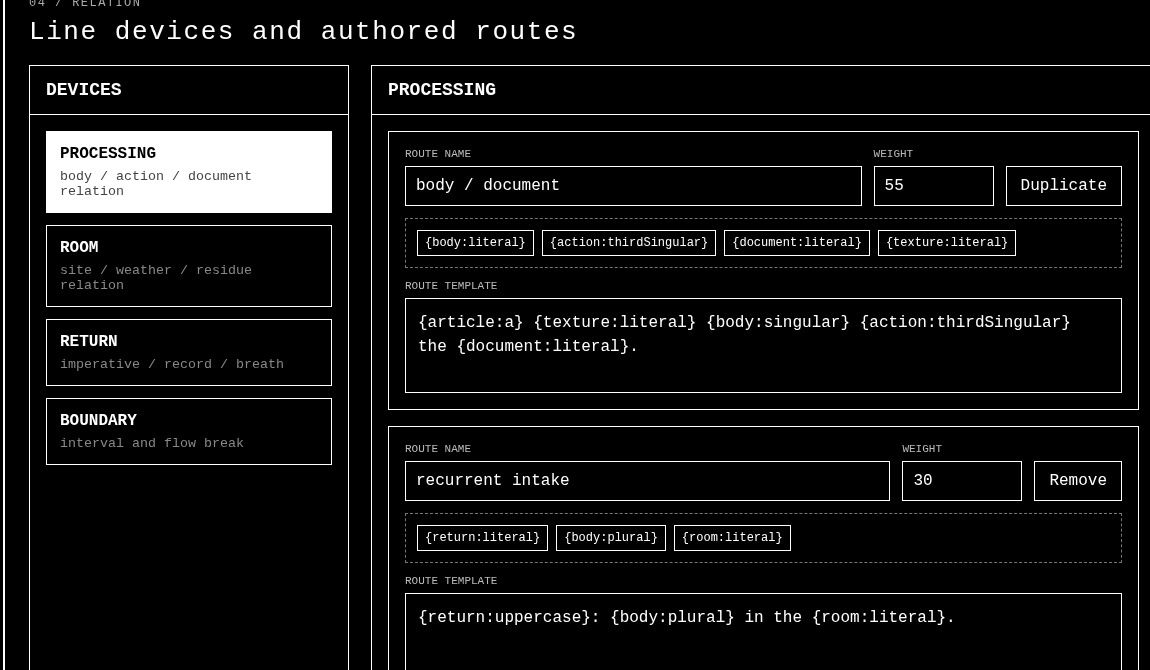
The list preserves the vocabulary of the composition while allowing one device to be opened for revision.
The work continues the literary proposition made public by Taroko Gorge: a compact generator can be read, altered, and carried into another ground. TAROKE RIMIXER expands that proposition into a full compositional environment.
The writer is not offered a blank box followed by an opaque result. Material is named. Transformations are local. Line-making devices can be inspected. Stanza and flow determine how the poem changes over time. The completed project can leave the workbench as its own playable artifact.
Grave-Machine was made through these layers, but it remains one authored work rather than a default template.