Practice

Across five works, sources, constraints, failures, and reader actions remain attached to the forms they help produce.

The work often begins when a material no longer fits its first container. A source grows too charged for a footnote; a short poem asks for darkness around it; a system notice keeps speaking after its promise of recovery has thinned; a dramatic scene begins to behave like a procedure.

No fixed sequence joins research, writing, interface, and code. Their relation is composed anew for each work.

01

Research can return

Speculative research poetry keeps the origin and limits of a source visible instead of letting a poem quietly absorb it. A source-bearing scene can acquire its own address inside the field, a location a reader can return to independently of the line it helped produce. The source stays available rather than exhausted by what a poem does with it — a working version of what object-oriented ontology calls withdrawal, built here into the interface rather than argued as philosophy.
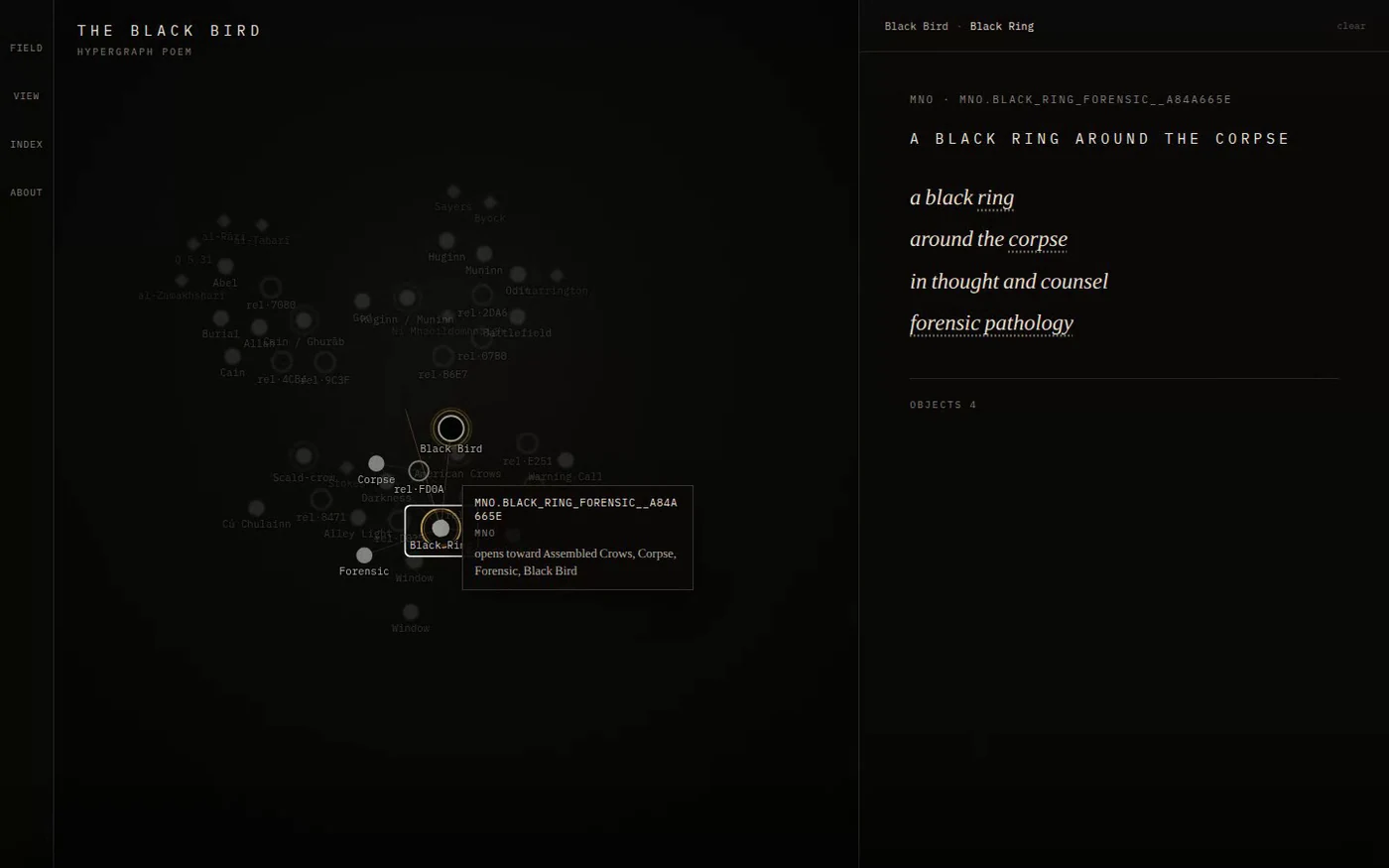
The Black Bird Reader beside its graph
A source-bearing object remains inside the field.
02

Writing through constraints

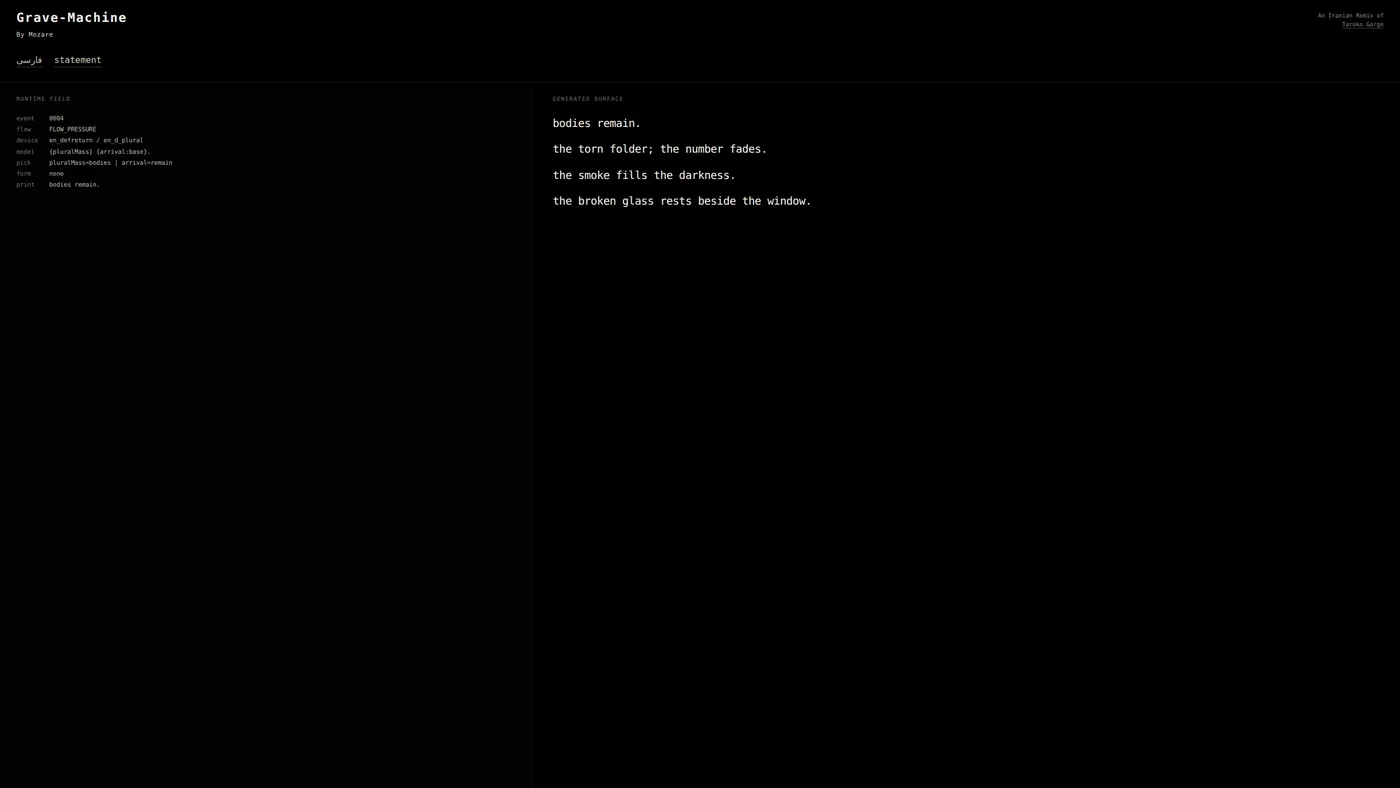
Generative writing places authorship inside the conditions of recurrence rather than outside them: a rule, a word bank, a timing pattern becomes where a decision actually gets made. One construction can carry real weight under its own pressure, tested against material it did not choose. Elsewhere in the practice, the construction itself is opened to revision — a rule set moves from infrastructure into something an author can work directly, so the constraint is rewritten as much as it is run. What gets kept, weighted, and allowed to recur is the writing.

Grave-Machine generated lines beside a runtime trace
The poem accumulates beside the record of its formation.
03

The interface carries consequence

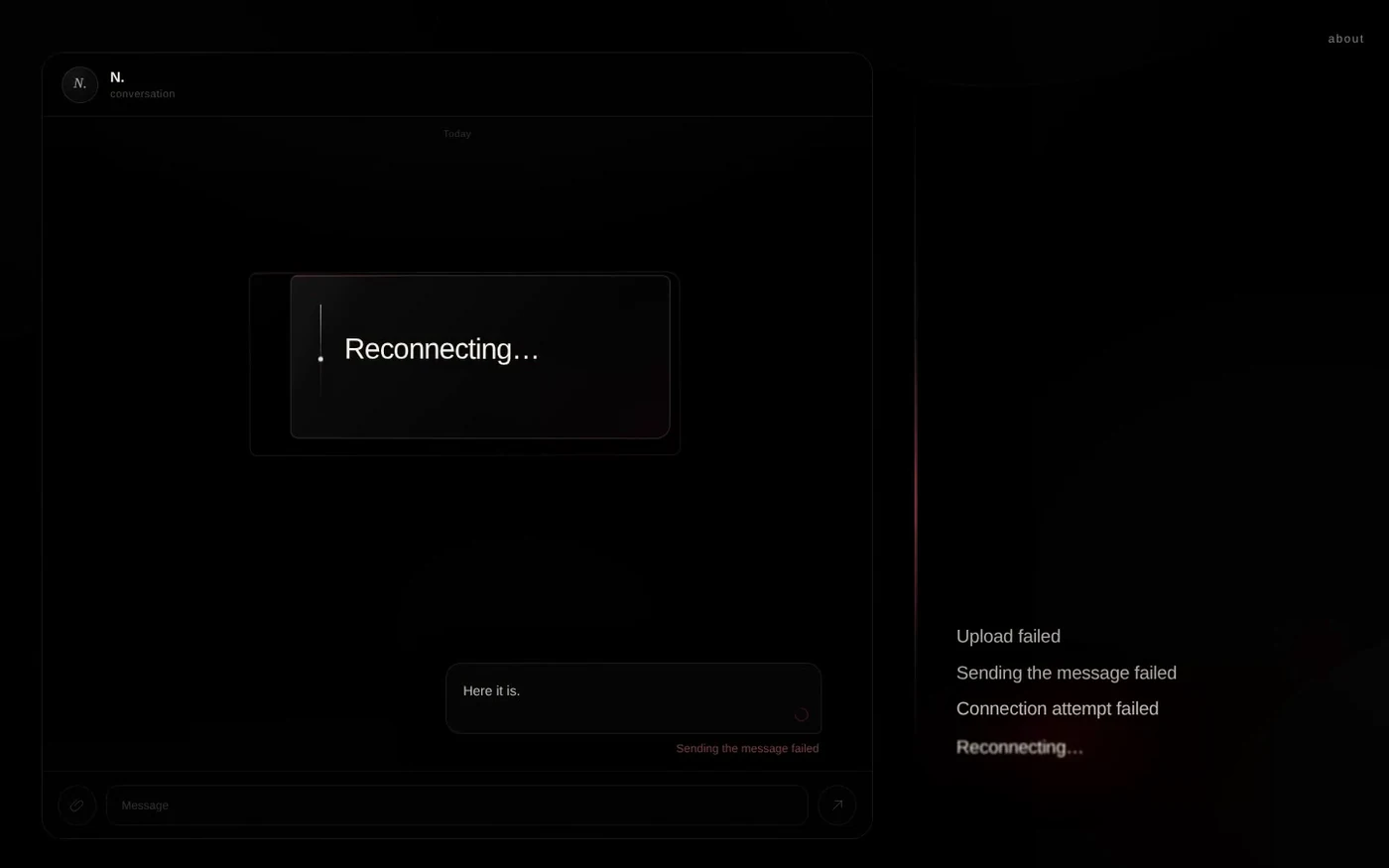
Interface choices are not neutral delivery for these works; they participate in what gets written. Nearness can govern visibility, so that a passage is not simply revealed but temporarily held, then let recede — reading becomes a duration rather than an access event. Elsewhere, a familiar system convention keeps speaking after its ordinary promise has thinned, letting the interface itself carry a piece's real subject. The commitment underneath is closer to a scenographer's use of light and staged visibility than to a screen designer's: what a reader can reach, and when, is authored with the same attention as what they read.

UNHAPPY Scenario reconnecting notice beside accumulated lines
A familiar system notice acquires another duration.